Tank vs. Tankless Water Heaters: A Practical Comparison for Homeowners
June 17, 2026
Replacing a water heater is one of those decisions most homeowners face without much warning. The unit stops working, the basement floods, or the hot water runs out mid-shower, and suddenly you are looking at a purchase that will affect your household for the next decade or more. What surprises many people is that the choice is no longer simple. For most of the twentieth century, tank water heaters were the only realistic option for residential properties. That has changed.
Tankless water heaters have moved from a niche product to a mainstream option, and the conversation around which system makes more sense has grown more nuanced as a result. Neither type is universally better. The right answer depends on your household size, your local utility setup, your plumbing configuration, and how long you plan to stay in your home. This guide breaks down how each system works, where each one performs well, and what you should honestly expect from both, so you can make a decision based on your actual situation rather than marketing claims.
How Each System Works
Tank Water Heaters
A traditional storage tank water heater holds between 30 and 80 gallons of water in an insulated tank. A burner or electric heating element keeps that water at a set temperature around the clock, regardless of whether anyone in the house is using hot water at that moment. When you turn on a faucet, preheated water travels from the tank to the fixture. As the tank drains, cold water enters at the bottom and the heating cycle begins again.
The mechanics are straightforward, which is part of why tank units have dominated residential installations for so long. The technology is well understood, parts are widely available, and most plumbers and HVAC technicians can service them without specialized training.
Tankless Water Heaters
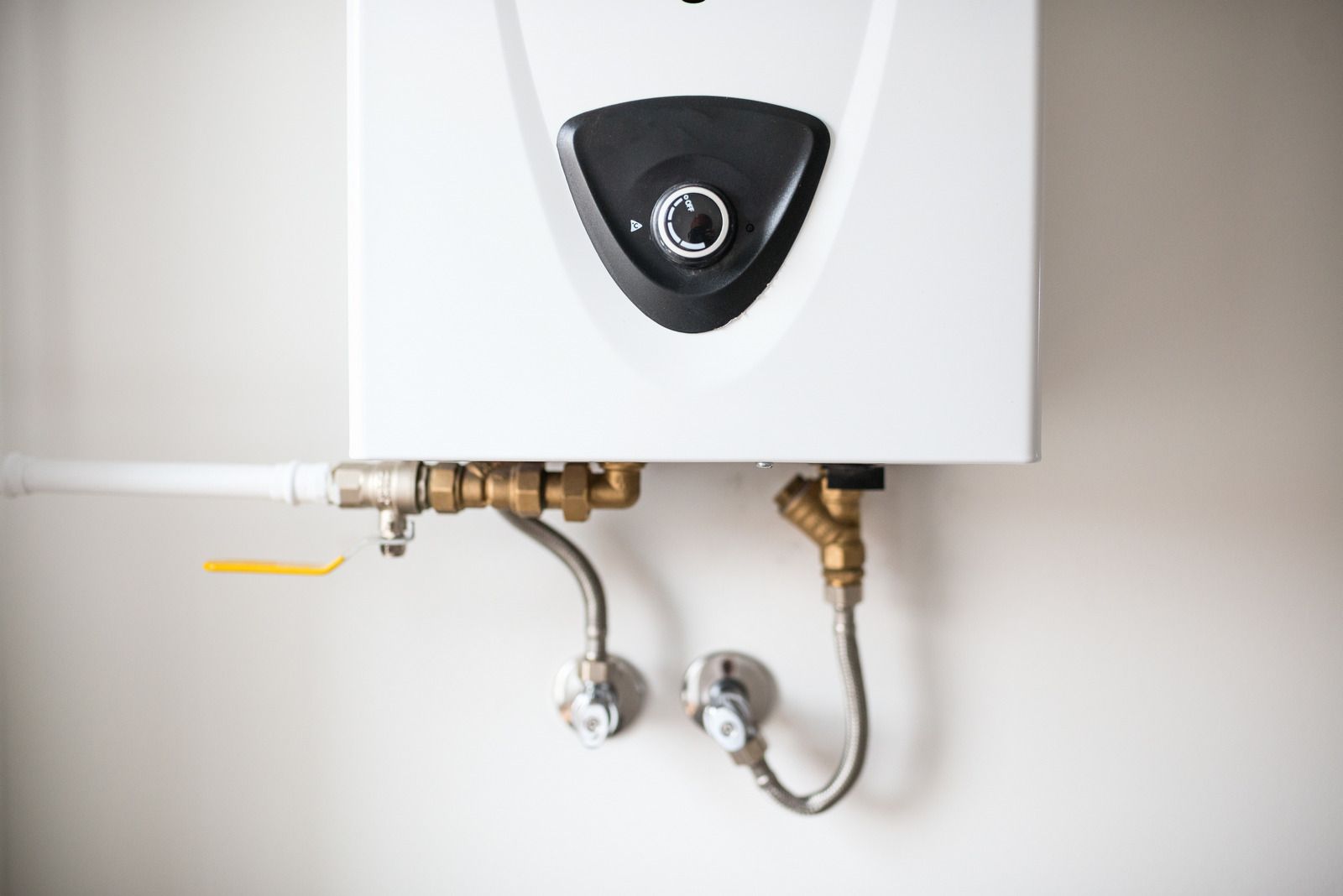
A tankless system, also called an on-demand or instantaneous water heater, has no storage tank. Instead, cold water passes through a heat exchanger the moment you call for hot water. Gas models use a high-powered burner; electric models use resistance coils. Either way, the water reaches temperature within seconds and continues flowing at that temperature for as long as the tap is open.
The absence of a storage tank means the unit only runs when you actually need hot water. It also means the unit cannot run out of stored supply, though it can be overwhelmed if demand across multiple fixtures exceeds its flow capacity at the same moment.
Performance and Daily Use
Where Tank Units Excel
For large households running dishwashers, showers, and laundry simultaneously, a properly sized tank unit handles simultaneous demand with no hesitation, because the reserve is already hot and waiting. Recovery time after heavy use is the main limitation. A 50-gallon tank depleted by back-to-back showers will need 20 to 40 minutes to fully reheat, depending on the unit and fuel source.
Where Tankless Units Excel
Tankless systems genuinely shine in lower-demand situations or where the household's hot water use is spread across the day rather than concentrated in short windows. A couple or a small family that staggers showers and runs appliances at separate times will likely never notice any limitation. The unit delivers consistent temperature from the first second to the last, with no gradual cooling as a tank depletes.
One real-world advantage worth noting: tankless units eliminate the risk of running out of hot water during a long shower. The flow rate is the constraint, not the supply.
Sizing and Installation Considerations
| Factor | Tank Water Heater | Tankless Water Heater |
|---|---|---|
| Space required | Significant floor space | Wall-mounted, compacts |
| Installation complexity | Standard plumbing connections | Often requires gas line upgrade or dedicated electrical circuit |
| Typical lifespan | 8 to 12 years | 15 to 20 years |
| Maintenance needs | Annual anode rod inspection | Annual descaling in hard water areas |
| Best household fit | Large families, high simultaneous demand | Smaller households, moderate demand, long-term ownership |
Sizing a tank unit involves matching the gallon capacity to your household's peak hour demand. A family of four typically needs 50 to 80 gallons, though usage patterns matter more than headcount alone.
Sizing a tankless unit is more technical. Installers calculate the temperature rise required (the difference between your incoming groundwater temperature and your desired output temperature) and multiply that by the gallons per minute you expect to draw at peak use. In colder climates, groundwater enters at lower temperatures, which means the unit has to work harder to reach the same output. This directly affects which model size is appropriate for your situation.
Installation for tankless units also frequently involves infrastructure upgrades that tank replacements do not. A gas tankless unit typically requires a larger gas supply line and a dedicated venting run. An electric tankless unit often requires a 200-amp panel or dedicated breaker circuits that older homes may not already have. These are real factors to account for when comparing the two options on overall investment.
Energy Use and Long-Term Ownership
Tankless water heaters are more energy-efficient in straightforward terms. A tank unit maintains temperature continuously, which means the burner or element cycles on and off all day and night, including hours when no one is home. This is called standby heat loss, and it represents energy consumed without any corresponding output for the household.
A tankless unit avoids standby loss entirely. The Department of Energy estimates that homes using 41 gallons or less of hot water daily can see significant efficiency gains with an on-demand system. For higher-usage households, the advantage narrows but does not disappear.
Over a 15 to 20 year period, which roughly corresponds to a tankless unit's operational lifespan, those efficiency differences accumulate. However, the upfront installation investment for tankless is higher, and whether that gap closes over time depends on your utility rates, how much hot water your household actually uses, and whether you need infrastructure upgrades during installation.
Maintenance and Longevity
Both system types require regular maintenance, though the nature of that maintenance differs.
Tank water heaters need an annual inspection of the anode rod, which is a sacrificial metal rod that prevents the tank interior from corroding. When that rod degrades fully, the tank itself begins to corrode, which shortens the unit's life and can lead to leaks or failure. Flushing sediment from the bottom of the tank periodically also helps maintain heating performance and extend service life.
Tankless units require descaling, particularly in areas with hard water. Mineral deposits accumulate in the heat exchanger over time and reduce flow and heating performance if left unaddressed. In hard water regions, annual flushing with a descaling solution is standard practice. Outside of that, the internal components of a well-maintained tankless unit can last 20 years or longer, which is notably longer than even a well-maintained tank unit.
Making the Right Choice for Your Home
There is no universal winner in this comparison. A tankless unit is not automatically the smarter choice, and a tank unit is not automatically outdated. The decision comes down to a few honest questions.
If you have a large family with high simultaneous demand, a properly sized tank unit may serve you better and involve a simpler, lower-investment installation. If you own your home long-term, have moderate hot water demand, and your gas or electrical infrastructure can support a tankless installation without extensive upgrades, an on-demand system offers a longer lifespan and lower ongoing energy use.
Climate also plays a role. In colder regions, tankless units work harder to raise groundwater temperature, which may require a larger model than the same household would need in a warmer part of the country. A local HVAC or plumbing professional familiar with your area's groundwater temperatures and utility infrastructure will give you more accurate guidance than any general comparison chart can.
Dependable Guidance When Your Water Heater Decision Matters Most
Tank and tankless water heaters each carry real strengths. Tank units are reliable, straightforward to install, and well-suited for households with high simultaneous demand. Tankless units offer longer operational lifespans, eliminate standby energy loss, and deliver hot water without a fixed supply limit. Neither system fits every home, and the right choice comes down to your household size, your infrastructure, and how long you plan to stay in the property. Understanding the mechanical differences, maintenance requirements, and practical limitations of both systems puts you in a position to make a decision you will not regret ten years from now. The goal is not to follow a trend but to match the right equipment to your actual household needs.
At ProTech Heat-Cool LLC, we have spent 30
years serving homeowners across Edwards, Missouri, and the surrounding region with honest, technically grounded HVAC and water heating guidance. We understand that a water heater decision is not just about equipment. It is about your home's infrastructure, your daily routine, and your long-term ownership plans. When we assess a home, we look at existing gas line capacity, electrical panel specifications, local water hardness, and household usage patterns before we recommend anything. Our work in Edwards, Missouri has given us direct experience with the groundwater temperatures and utility configurations that affect how each system type performs in this specific region. Whether you are replacing a failing tank unit or considering an upgrade to a tankless system, we bring the technical background to guide that decision accurately, not generically.
Frequently Asked Questions
Can a tankless water heater handle multiple showers running at the same time?
It depends on the unit's flow rate rating. A properly sized whole-home tankless unit can handle two simultaneous showers, but undersized models may deliver reduced temperature or flow when multiple fixtures run at once.
How long does a tank water heater typically last compared to a tankless unit?
A standard tank water heater lasts 8 to 12 years with regular maintenance. A tankless unit, maintained properly, routinely reaches 15 to 20 years of service life, which is a meaningful difference over a homeownership timeline.
Do tankless water heaters work well in cold climates?
Yes, but sizing matters more in cold climates. Groundwater enters at lower temperatures, so the unit must raise water temperature by a larger margin. This requires selecting a model rated for the appropriate temperature rise and flow rate for your region.
Is a tankless water heater harder to maintain than a tank unit?
Both types need annual attention. Tank units need anode rod inspection and periodic sediment flushing. Tankless units need descaling, especially in hard water areas. Neither is dramatically more demanding, though descaling requires a specific process that some homeowners prefer to leave to a professional.
What infrastructure changes might a tankless installation require?
Gas tankless units often need a larger supply line and dedicated venting. Electric tankless units frequently require a higher-amperage panel or dedicated circuits. Older homes in particular may need electrical or gas upgrades before a tankless unit can be installed, which is worth evaluating before committing to a specific system.