AC Blowing Warm Air in the Missouri Heat? What's Usually Behind It
July 7, 2026
Quick Answer: When your AC runs but blows warm air, the usual culprits are a clogged filter choking airflow, a low refrigerant charge from a leak, a thermostat set or wired wrong, dirty coils, or an outdoor unit that has lost power or a failing compressor. Airflow and refrigerant problems are the most common. A dirty filter or wrong thermostat setting you can check yourself, but low refrigerant, iced coils, and compressor faults need a technician. Running the system while it blows warm can overheat the compressor, so it is worth shutting down and diagnosing rather than letting it grind on.
It is the middle of a July afternoon at the lake, the thermostat says cool, you can hear the system running, and the air coming out of the vents is not cold. Maybe it started as a house that just would not get down to temperature, and now the air feels flat-out warm. The unit is doing something, so it is easy to assume it is fine and the weather is just winning. It is not fine, and the pattern you are seeing points to a handful of specific faults.
An air conditioner cools by moving heat, not by making cold. Refrigerant absorbs heat from the indoor air at the evaporator coil, carries it outside, and dumps it at the condenser. When that heat-moving cycle breaks anywhere along the line, the blower keeps pushing air through the vents, but that air never gets cooled. So warm air from a running system is almost always a sign that one link in the chain has failed. Here is what usually causes it in a central Missouri summer, and how to tell which problem you are dealing with.
Start With Airflow, Because a Dirty Filter Chokes the Whole System
The clogged filter check
The single most common reason an AC struggles to cool is a filter packed with dust. When the filter is caked, air cannot move across the evaporator coil the way the system needs. The Department of Energy calls cleaning or replacing a clogged filter the quickest way to save energy on home cooling, and a dirty filter that slows airflow makes the system work harder to hold temperature. ENERGY STAR advises checking the filter every month during heavy-use summer and winter stretches, changing it if it looks dirty, and swapping it at least every three months. For a one-inch pleated filter, manufacturer guidance from Carrier is replacement every 30 to 90 days.
Why choked airflow turns into warm air
A starved coil does not just cool weakly. With too little warm room air passing over it, the coil can get so cold that condensation on its surface freezes into ice. Once the coil is iced over, it cannot absorb heat at all, and the vents blow air that is barely conditioned or plainly warm. This is common in humid Lake of the Ozarks summers, where there is plenty of moisture in the air to freeze onto a starved coil. If you pull the filter and it is gray and matted, that alone can be your answer, though you may have to let a frozen coil thaw before the system recovers.
Check the Thermostat and the Outdoor Unit's Power
The control-center problem
Sometimes the AC itself is fine and the thermostat is the issue. A thermostat bumped to Heat, set to Fan Only, running on dead batteries, or misreading the room temperature will leave you with warm air from a system that appears to be running. Carrier notes that replacing batteries or recalibrating the thermostat often clears this up. It costs nothing to rule out, so it is worth a look before you call anyone.
The dead condenser outside
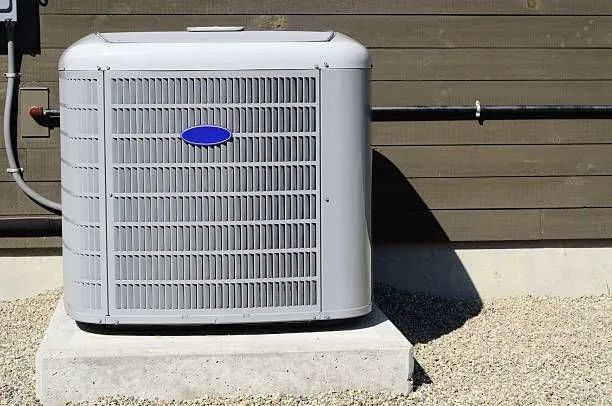
Your outdoor unit, the condenser, is where heat gets released. If it has lost power at its own disconnect or a tripped breaker, the indoor blower keeps running and circulating air that never got cooled, because the outdoor half of the system is dark. Walk out to the condenser. If the big outdoor fan is not spinning while the indoor system runs, the outdoor unit is not doing its job, and the warm air makes sense. A tripped breaker that keeps tripping is its own warning and should be diagnosed, not repeatedly reset.
Dirty Coils and a Struggling Compressor
The caked condenser coil
Even with power, the outdoor unit cannot dump heat if its coil is smothered in cottonwood fluff, grass clippings, and dust, which central Missouri yards produce in abundance. ENERGY STAR notes that a dirty coil reduces the system's ability to cool and forces it to run longer, driving up energy use. When the condenser cannot shed heat, the refrigerant returns to the house still warm, and the vents blow warm along with it. Keeping the area around the outdoor unit clear of vegetation and debris is one of the few things you can safely do yourself.
The failing compressor
The compressor is the heart of the system, the pump that moves refrigerant through the cycle. When it overheats or fails, the refrigerant stops circulating and the system can only push warm air. This is why running an AC that is already blowing warm is a mistake. Carrier advises shutting the system off when it blows warm, because forcing a struggling system to keep running can overheat the compressor and turn a repair into a replacement. A compressor problem is a technician's job to confirm and fix.
Warning: Do not keep running an AC that is blowing warm air in hopes it will catch up. If a starved or low-charge system has iced its coil, or the compressor is straining, continued running can overheat the compressor and cause permanent damage. Shut it down, let any ice thaw, check the filter and thermostat, and if it still blows warm, have it looked at before more harm is done.
Why a Missouri Summer Exposes All of This
None of these faults are random, and it is no coincidence they show up on the hottest, stickiest days. When it is in the mid-90s and humid off the lake, your system runs long, hard hours with very little rest. Space cooling already accounts for a meaningful share of home energy use, and roughly two-thirds of U.S. homes rely on air conditioning to get through summer, so the equipment is under real load exactly when any weakness gets tested.
Heat and humidity stack the deck. A marginal filter that limped along in spring now starves a coil that freezes because there is so much moisture in the air. A slow refrigerant leak that went unnoticed in mild weather can no longer keep up when the system has to pull the house down 20-plus degrees against the outdoor heat. A condenser coil coated in summer pollen cannot shed heat on a day when it desperately needs to. The season does not cause these problems so much as reveal the ones already there, which is why so many warm-air calls land in the peak of summer.
Frequently Asked Questions
Why is my AC running but blowing warm air?
An air conditioner blowing warm air usually indicates interrupted cooling. Common causes include clogged filters, low refrigerant from leaks, dirty coils, thermostat problems, outdoor unit power loss, or compressor issues preventing proper heat transfer and cooling.
Can a dirty filter really make my AC blow warm air?
Yes. A clogged air filter restricts airflow across the evaporator coil, allowing ice formation. Frozen coils cannot absorb indoor heat effectively, causing warm air from vents until airflow improves and accumulated ice completely melts away.
Does low refrigerant mean my AC just needs a top-off?
No. Low refrigerant indicates a leak because air conditioning systems are sealed. Simply adding refrigerant without repairing the leak wastes refrigerant, reduces efficiency, and risks compressor damage through continued operation with incorrect system pressures over time.
Should I turn the AC off if it is blowing warm air?
Yes. Continuing to operate an air conditioner blowing warm air may worsen existing damage. Turn the system off, inspect the filter and thermostat, allow frozen coils to thaw, and arrange professional diagnosis if cooling fails.
Why does this happen most on the hottest days of summer?
Extreme summer heat forces air conditioners to operate longer, exposing airflow restrictions, refrigerant shortages, dirty coils, or worn components. Higher humidity also increases system demand, making previously unnoticed cooling problems become much more obvious quickly.
Is warm air an AC problem or a thermostat problem?
Warm air may result from thermostat settings, battery issues, or incorrect temperature readings. If settings are correct, the problem more likely involves airflow restrictions, refrigerant loss, outdoor equipment failure, or another air conditioning system malfunction.
Getting Cold Air Back Instead of Guessing
Warm air from a running AC is not the weather winning, it is a signal that the heat-moving cycle has broken somewhere between your vents and the unit outside. Start with the two things you control, a clean filter and a thermostat set to Cool on Auto, and clear any debris smothering the outdoor unit. If the vents are still warm after that, you are almost certainly looking at a low charge, an iced or dirty coil, or a compressor problem, and forcing the system to keep running only risks turning a repair into a replacement. The smart move in the heart of a Missouri summer is to shut it down and get a straight diagnosis.
Schedule an AC warm-air diagnosis — When your vents are blowing warm and the house is not catching up, you need to know whether it is a starved coil, a refrigerant leak, a dirty condenser, or a compressor on its way out before running the system does more damage. With 30
years of experience, ProTech Heat-Cool LLC
measures
refrigerant pressures, checks airflow and coils, tests the compressor and thermostat, and pinpoints the real cause instead of guessing. Proudly serving Edwards, Missouri, we restore reliable cooling before the next stretch of summer heat. Book your cooling diagnosis today and stop fighting the thermostat.