AC Running Nonstop but the House Never Cools? Why It Can't Keep Up
August 27, 2026
Quick Answer: An AC that runs nonstop without reaching the thermostat setting usually means the system is losing a fight it should be able to win: it can't move enough heat out of the house fast enough to keep up. The most common reasons are a cooling load that outgrew the equipment, such as a finished porch or added square footage; ductwork leaking 20 to 30 percent of the cooled air into the attic or crawlspace before it reaches a vent; a dirty filter or closed-off vents choking airflow; a condenser coil caked in debris that can't shed heat outside; or a slow refrigerant leak cutting into capacity. On a truly brutal Missouri afternoon, an hour or more of steady runtime can be normal. The problem is when the house never gets there at all, or sits several degrees off no matter how long the system runs.
Your outdoor unit has been running since before lunch. It's mid-afternoon now, the thermostat is set to 72, and the display still reads 78. Walk over to a supply vent and the air coming out is actually cold — so the system isn't dead. It's just losing. Somewhere between the compressor outside and the room you're sitting in, more heat is getting into the house than the AC can carry back out, and that gap is what you're feeling as a house that won't cool down.
That's a different problem than a system that blows warm air the second it kicks on. This one is doing real work. It's just not enough work, and the reasons a properly running AC loses that race are fairly specific once you know where to look.
Not Every Long Runtime Is a Problem
Before chasing a fault, it helps to know what normal looks like. On a mild spring day, a well-matched system might run in short bursts and shut off well before the hour is up. On a brutal 95-degree afternoon with lake-country humidity sitting heavy over Benton County, that same healthy system can run close to continuously and still be doing exactly what it's supposed to do — because the heat load on the house is close to the equipment's limit that day.
The real signal isn't runtime by itself. It's whether the house ever gets there. A system running nonstop that's slowly closing the gap, and holds the line once it arrives, is working as designed under a heavy load. A system running nonstop that plateaus five or eight degrees above setpoint and never moves again, day after day, has an actual fault somewhere in the chain. That distinction is where the diagnosis starts.
The System Was Never Sized for This Much House
Additions change the math
A lot of homes around Warsaw and the Lake of the Ozarks started as smaller footprints and grew — a screened porch turned into a den, a walkout basement finished into living space. Each of those additions puts more square footage, more windows, and more heat gain onto a system that was sized for the original house. The AC hasn't gotten weaker. The house just got bigger than the equipment.
Lake exposure adds load too
Homes with big lake-facing windows or a wall of glass looking at the water pull in a lot of solar heat through the afternoon, on top of whatever the walls and roof are already gaining. A system sized around average conditions can fall behind on that kind of glass-heavy layout even without any addition at all.
A load mismatch doesn't look like a broken AC. It looks like a system that runs correctly, sounds correct, and simply can't move heat out as fast as it's coming in. A technician checks this by calculating the home's actual cooling load against the equipment's rated capacity — not by guessing from the tonnage on the nameplate.
Cooled Air Is Leaking Out Before It Reaches the Rooms
Even a correctly sized system can't do its job if the air it produces never makes it to the living space. Ductwork that runs through an attic or crawlspace — common in homes built or expanded in stages — is a frequent weak point. According to the U.S. Department of Energy's ENERGY STAR program, a typical home's duct system loses about 20 to 30 percent of the air moving through it to leaks, gaps, and poorly sealed joints. That's a fifth to a third of your cooled air dumping into a 130-degree attic instead of your living room.
Leaky ducts explain a pattern a lot of homeowners notice but don't connect: one or two rooms stay stubbornly warm no matter how long the system runs, while the room near the thermostat feels fine. The thermostat is reading a room that's getting adequately served, so the system shuts off, or keeps grinding, based on data that doesn't reflect what the far end of the house is actually experiencing. Sealing and pressure-testing the duct system is one of the higher-impact fixes available, and it's not something you can eyeball from inside a closet.
Airflow Restrictions Choke Capacity From the Inside
The filter is doing more damage than you'd guess
A filter packed with dust restricts the volume of air moving across the evaporator coil, and the system can only cool as much air as it can actually pull through. A choked filter doesn't stop cooling outright — it just cuts how much cooled air gets delivered per minute, which shows up exactly as "runs forever, never quite gets there."
Closed vents rarely help the way people think
Shutting vents in unused rooms to push more air elsewhere is a common instinct, but most residential systems are designed around a specific total airflow. Closing off several vents raises pressure in the ductwork and can choke the blower rather than redirect capacity, especially on older duct layouts common in central Missouri homes built before central air was standard.
Tip: Walk the house and check that furniture, rugs, or curtains aren't blocking supply vents or the return air grille. A return that's even partially covered starves the whole system of the air it needs to pull in and cool, and it's one of the few causes you can rule out yourself in five minutes.
The Outdoor Unit Can't Shed Heat Fast Enough
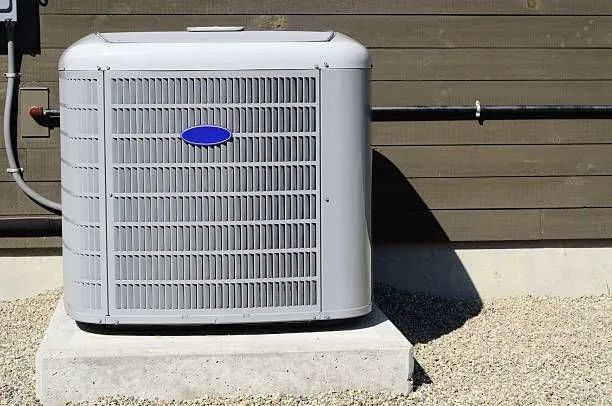
The condenser outside is where the heat your AC collects indoors actually leaves the building. If that coil is coated in cottonwood fluff, grass clippings, and pollen — which piles up fast on rural and lake properties through a Missouri summer — it can't release heat into the outdoor air as efficiently. The system keeps running because it has to work harder to dump the same amount of heat, and runtime climbs even though nothing inside the house has changed.
A refrigerant charge that's drifted low from a slow leak does something similar. It doesn't necessarily stop the system from cooling entirely; it just reduces how much heat the refrigerant can carry per cycle, so the compressor runs longer to move the same load. This is a case where "it's still blowing cold, just not cold enough, and it never shuts off" points toward a technician checking pressures rather than a homeowner adding refrigerant on a guess — an incorrect charge, high or low, reduces capacity and can shorten the compressor's life.
The compressor is the heart of the system, the pump that moves refrigerant through the cycle. When it overheats or fails, the refrigerant stops circulating and the system can only push warm air. This is why running an AC that is already blowing warm is a mistake. Carrier advises shutting the system off when it blows warm, because forcing a struggling system to keep running can overheat the compressor and turn a repair into a replacement. A compressor problem is a technician's job to confirm and fix.
The caked condenser coil
The failing compressor
Why This Shows Up Hardest in Missouri Summers
None of this is random timing. Space cooling accounts for a meaningful share of a typical home's total energy use, and the systems carrying that load are already running near their ceiling on the hottest days of the year. In central Missouri, high heat routinely arrives paired with heavy humidity off the lake, which adds a second job to the AC's workload beyond just dropping the temperature — it also has to pull enough moisture out of the air to keep the house from feeling clammy even at the right number on the thermostat.
That combination is exactly what exposes a marginal system. A load mismatch that was barely noticeable in May becomes obvious in late July. Duct leaks that lost a tolerable amount of cooling in mild weather now cost you the margin you needed on a 97-degree day. A dirty condenser coil that shed heat "well enough" in June can't keep up once the outdoor air itself is closer to 100 degrees and offers less of a temperature difference to work with. The equipment doesn't fail all at once — the season just stops covering for whatever was already marginal.
Warning: Don't respond to a system that won't catch up by dropping the thermostat lower and lower. Pushing the setpoint down doesn't make the system move heat any faster — it just keeps the compressor running longer against a load it's already struggling with, and in humid conditions that extended runtime raises the risk of the evaporator coil icing over, which can shut cooling down completely until the ice thaws.
How a Technician Narrows Down the Actual Cause
Because several unrelated problems produce the same symptom — long runtime, house never quite gets there — a proper diagnosis measures rather than guesses. That typically means calculating the home's real cooling load against what the installed equipment can deliver, testing duct static pressure and checking for leakage at the seams, verifying airflow at the return and across the coil, and checking refrigerant pressures against the manufacturer's specification for the outdoor temperature that day. Each of those tests rules something in or out, and together they show which one it actually is — an undersized system, a leaky duct run, an airflow restriction, or a refrigerant problem.
But the fixes aren't interchangeable. Sealing ducts won't help a system that's simply too small for an addition. Adding refrigerant won't fix a duct leak. Getting the actual cause first is what keeps you from throwing money at the wrong repair and still sweating through August.
Frequently Asked Questions
Why does my AC run all day and never reach the temperature I set?
Your AC may struggle because of undersized equipment, leaking ducts, restricted airflow, dirty coils, or low refrigerant. These problems reduce cooling capacity and prevent your home from reaching temperature.
Is it normal for the AC to run almost constantly on the hottest days?
Yes. During extremely hot, humid days, an AC may run nearly nonstop. It becomes concerning when indoor temperatures remain several degrees above the thermostat setting despite continuous operation for hours.
Could an addition to my house be the reason the AC can't keep up?
Yes. Finished porches, converted garages, and other additions increase the area your AC must cool. If the original system was not sized for added space, it may struggle during summer heat.
Will closing vents in unused rooms help the AC catch up?
Usually not. Closing multiple vents can increase duct pressure and restrict airflow through the system instead of redirecting cooling. This may reduce efficiency and make existing comfort problems even more noticeable.
How much cooling can a house lose to duct leaks?
Duct leaks can waste substantial cooled air, especially when ducts travel through attics or crawlspaces. Poor connections allow conditioned air to escape before reaching rooms, reducing overall cooling performance significantly.
Should I just keep lowering the thermostat if the house isn't cooling down?
No. Lowering the thermostat will not make your AC cool faster. It simply extends compressor runtime and may increase the risk of evaporator coil icing when airflow or system performance suffers.
Restoring Reliable Cooling Through Missouri’s Hottest Summers
A system that runs nonstop without reaching the thermostat setting is usually struggling with more than hot weather alone. Undersized equipment, leaking ductwork, restricted airflow, dirty condenser coils, or refrigerant problems can all reduce cooling capacity when demand is highest. Identifying the actual cause matters because each problem requires a different solution. ProTech Heat-Cool LLC brings 30 years of experience serving Edwards, MO, helping homeowners understand why cooling systems fall behind during demanding Missouri summers and humid conditions.
Reliable cooling comes from making sure the entire system works together, from proper equipment sizing and steady airflow to sealed ducts and efficient heat transfer outdoors. Once the source of lost capacity is identified, the system can operate more effectively without unnecessary strain or endless runtime. Addressing these underlying issues also supports more consistent indoor temperatures, better humidity control, and dependable performance when summer conditions become severe, allowing the home to stay comfortable without the
air conditioner
constantly struggling to catch up.